
The Woods
Ada, Michigan. A forever home in the woods - traditional timber framing details meet modern building science.
This is an active project. Updates to come.
The Home
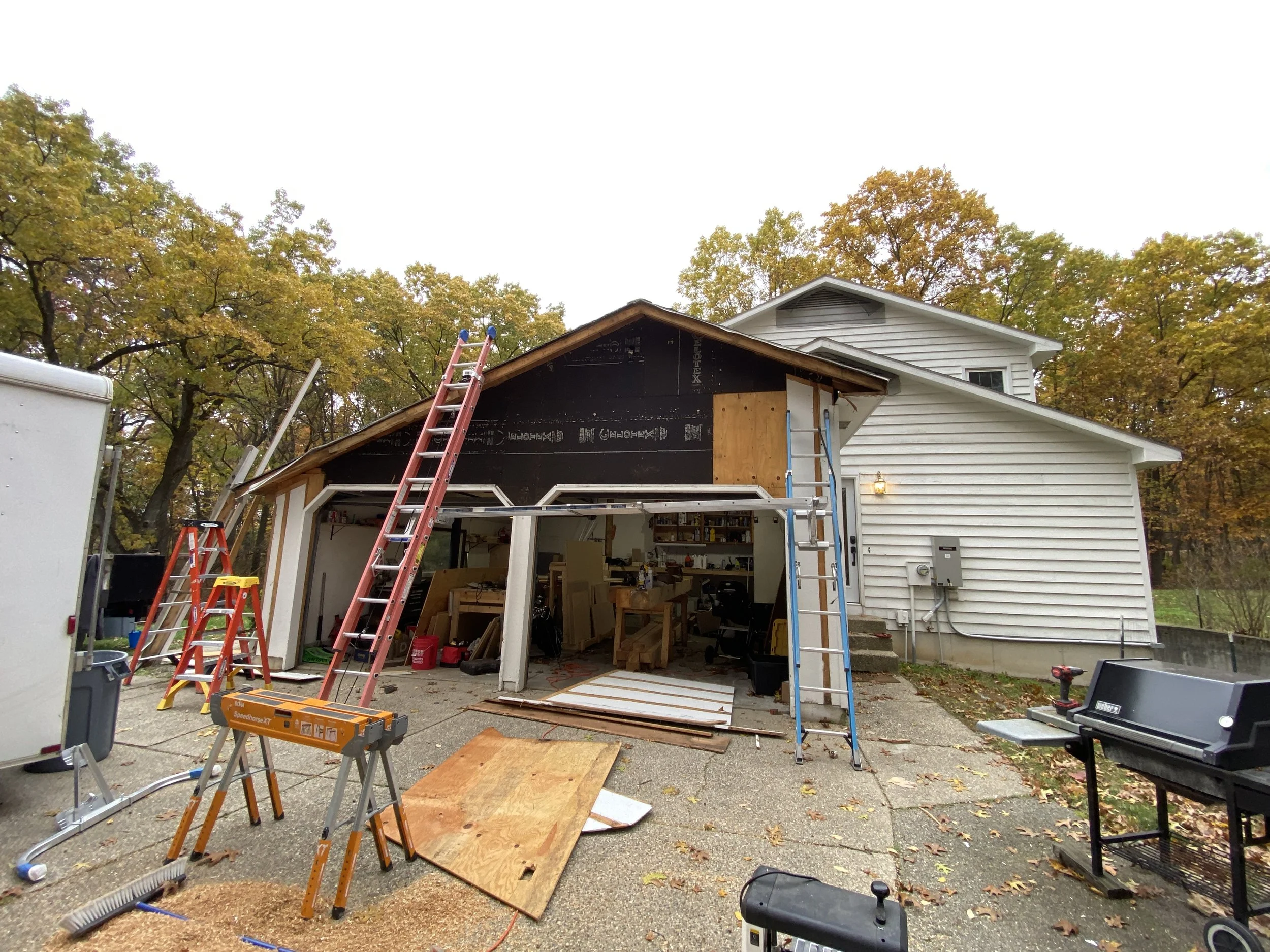
A 1979 Colonial on 5 acres. With an aging exterior letting critters into the home, an exterior remodel was the first priority.
Whether for budgeting or other life circumstances, tackling a whole-home remodel in phases is a common occurrence. The key to a successful phased remodel is in the PreConstruction phase; ensuring that each step forward sets up the next phase for success.
The primary goals for this exterior phase:
Creating a robust separation between the outside and inside of the home. A new exterior wall assembly adds the much-needed control that was lacking; control over water, air, temperature, and woodland critters.
Fixing a handful of major and minor design flaws. An uncovered back entry that leaves visitors waiting in the rain, a bay window with no overhang or insulation, and an unused back porch.
Adding outdoor living space to the front of the home.
A Reimagined Entry
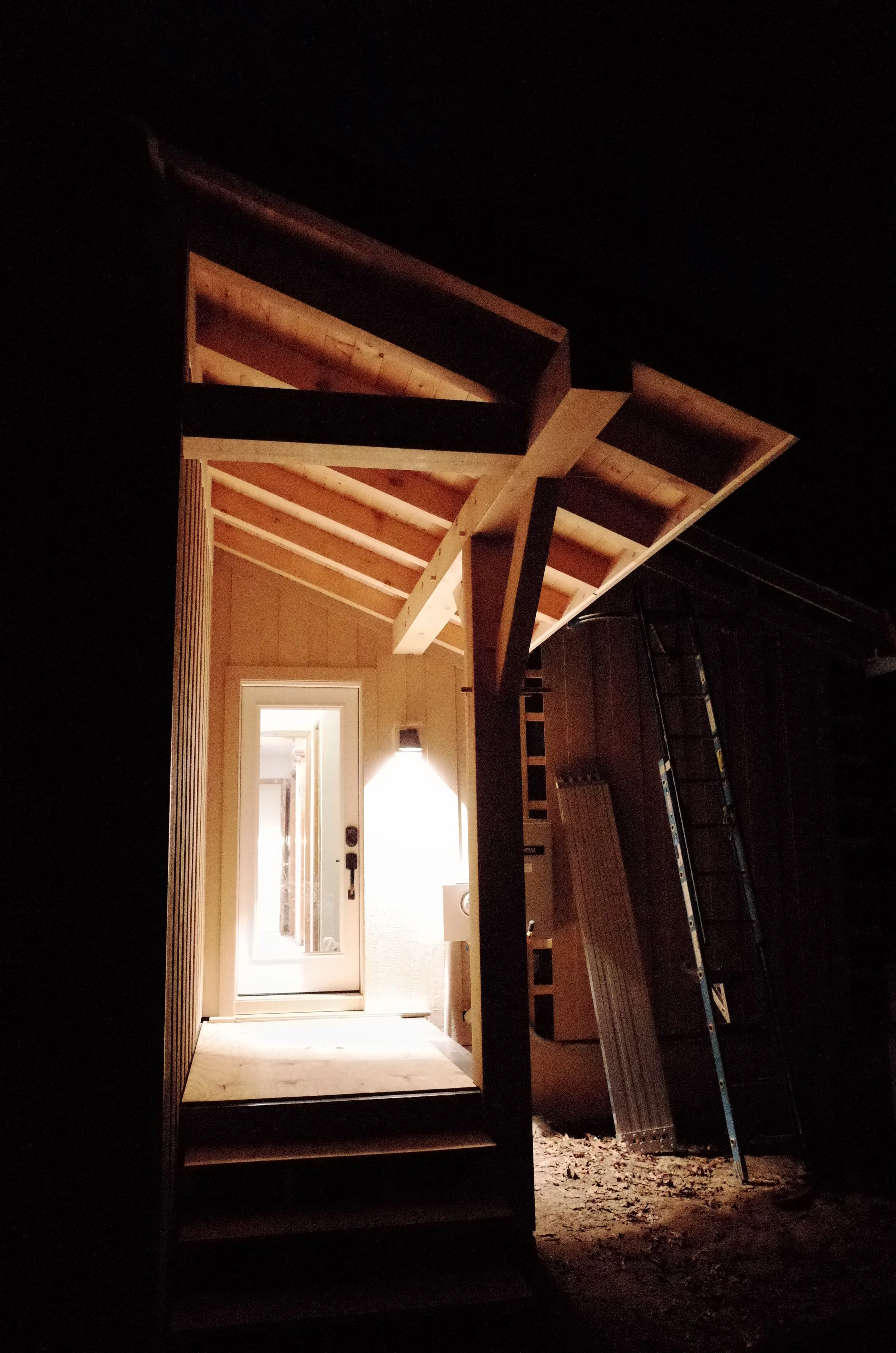
The main entrance to the home left the owners and visitors standing in the dark and exposed to the elements. Poor design and water management left the exterior door exposed to gallons of water at each rainfall - leading to premature failure and framing damage.
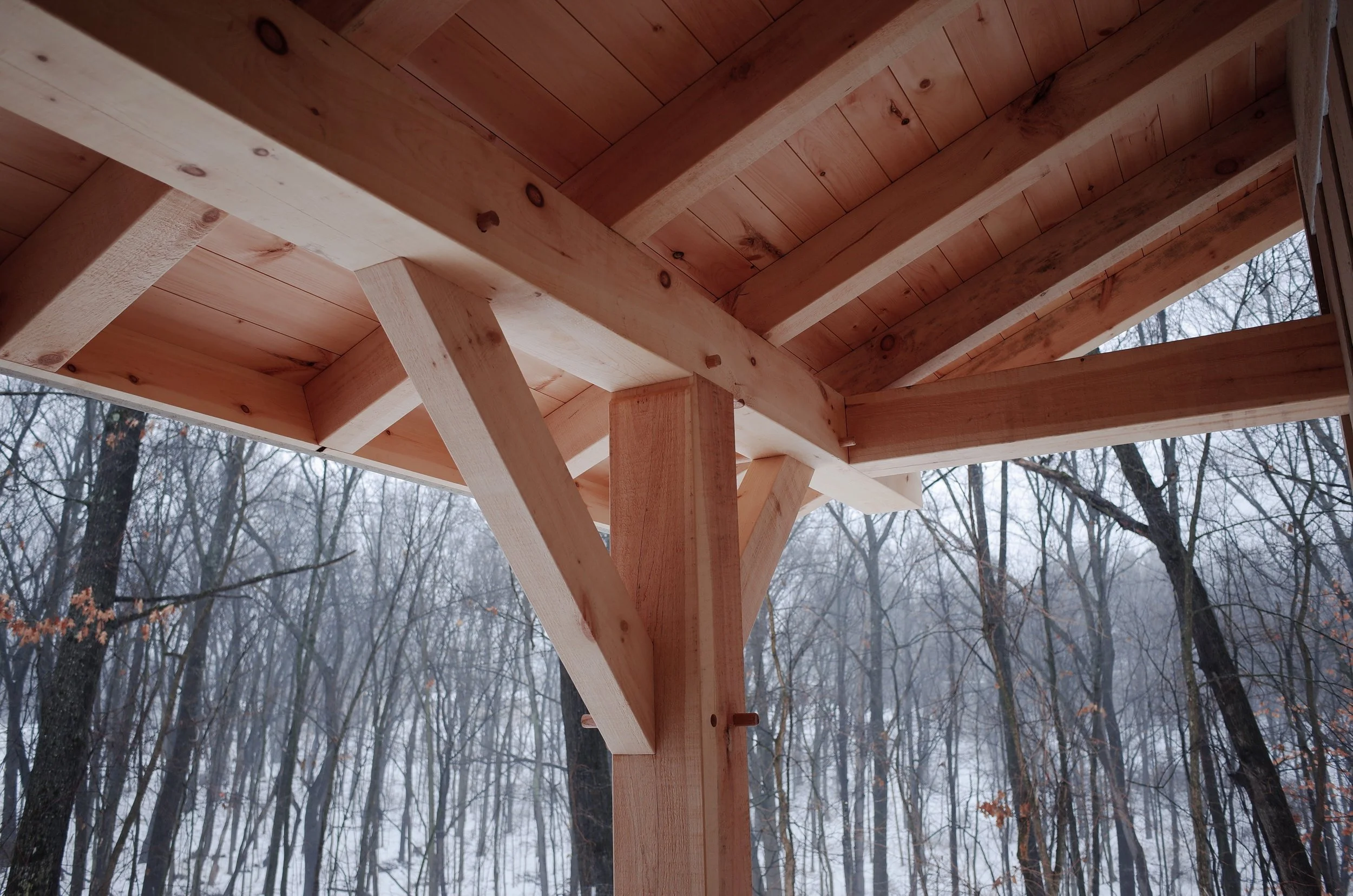
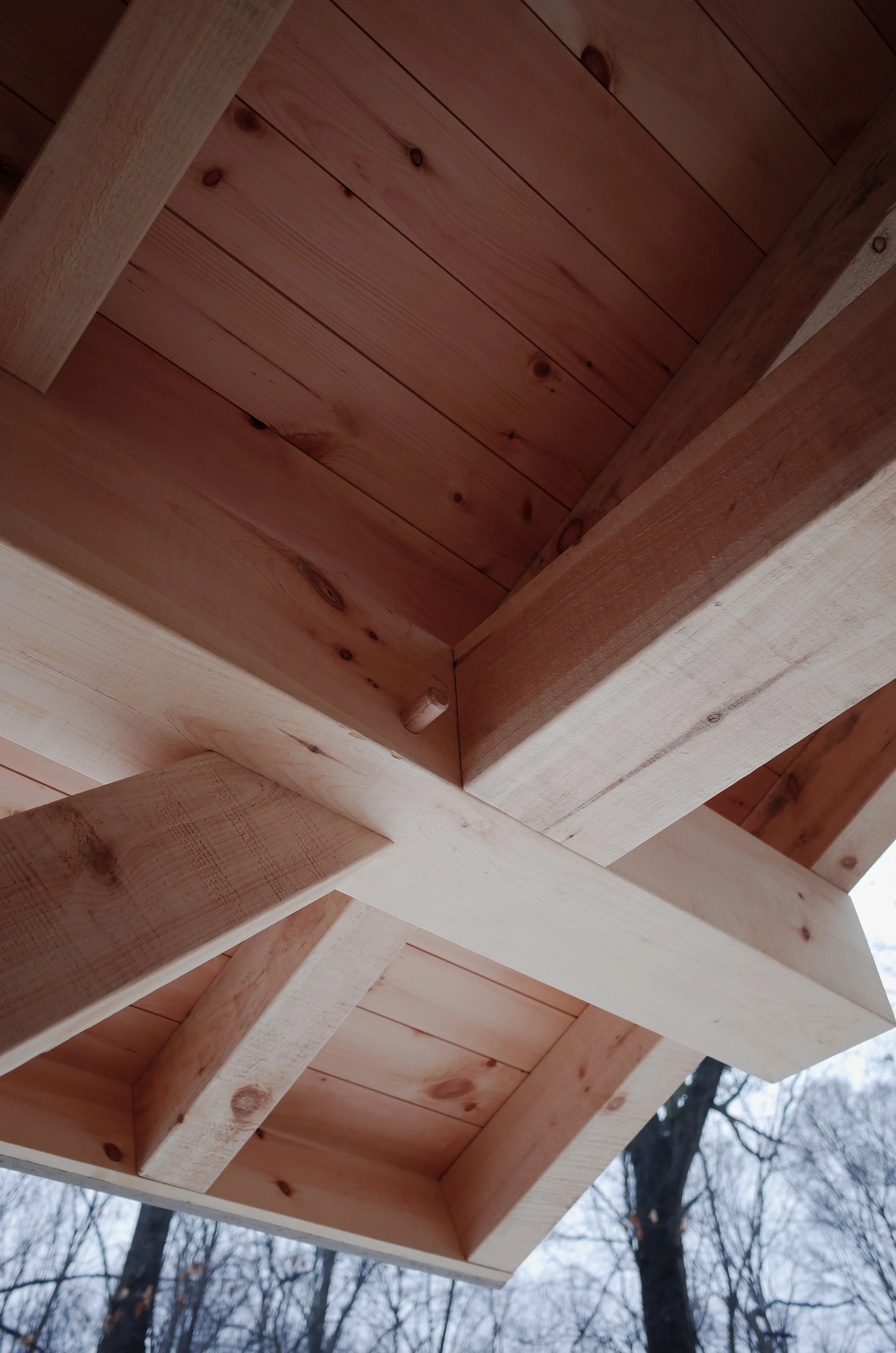
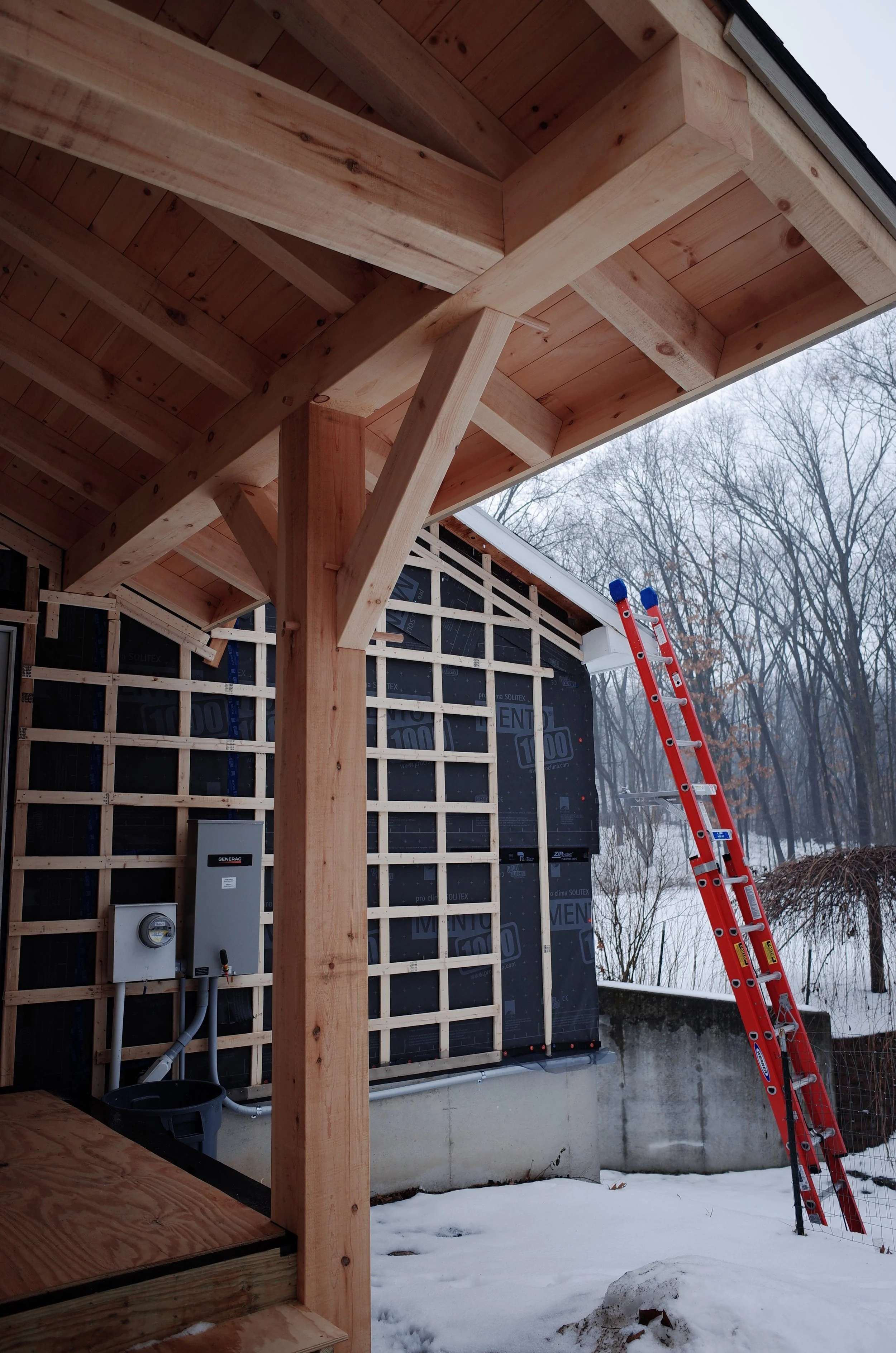
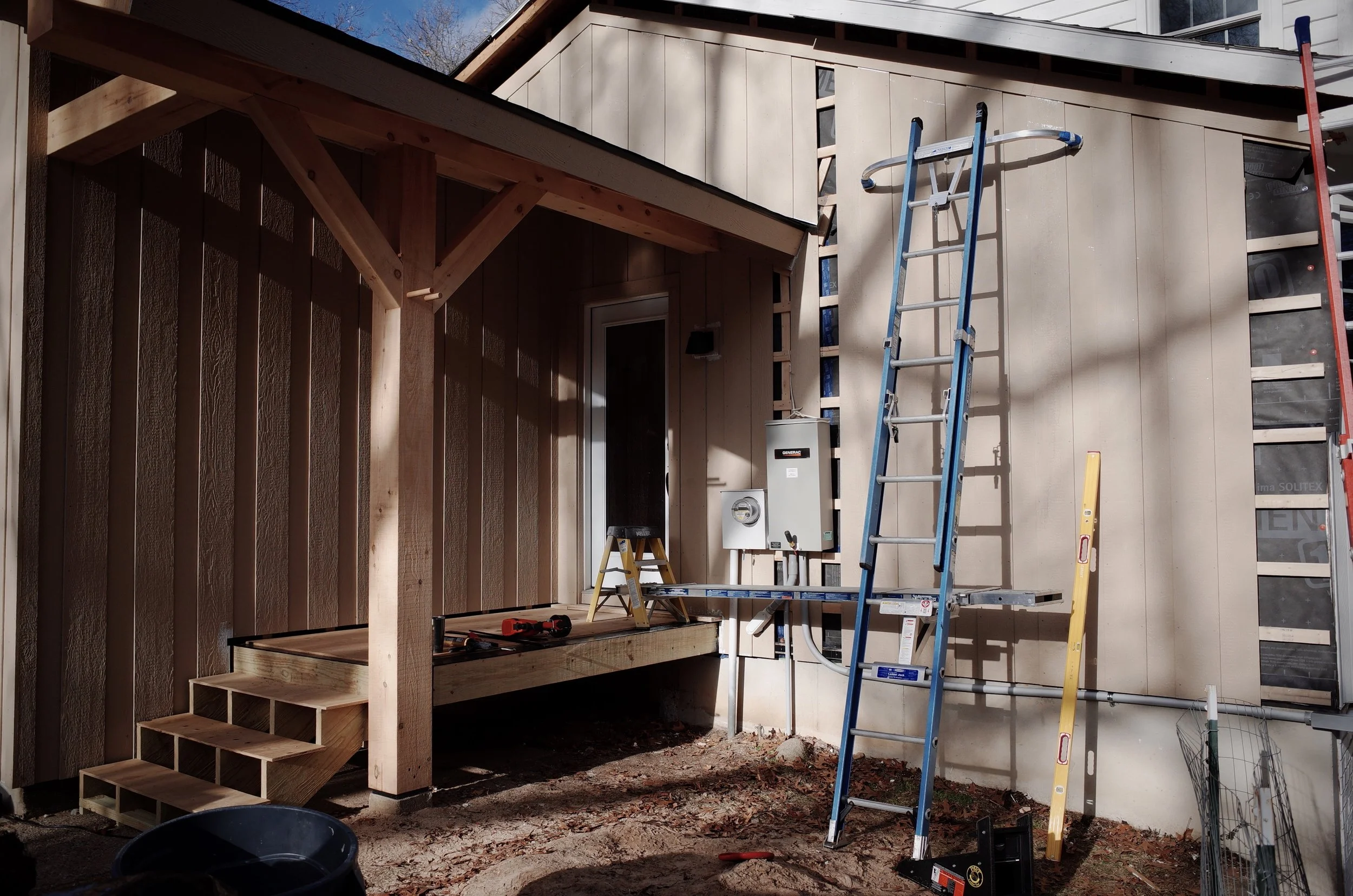
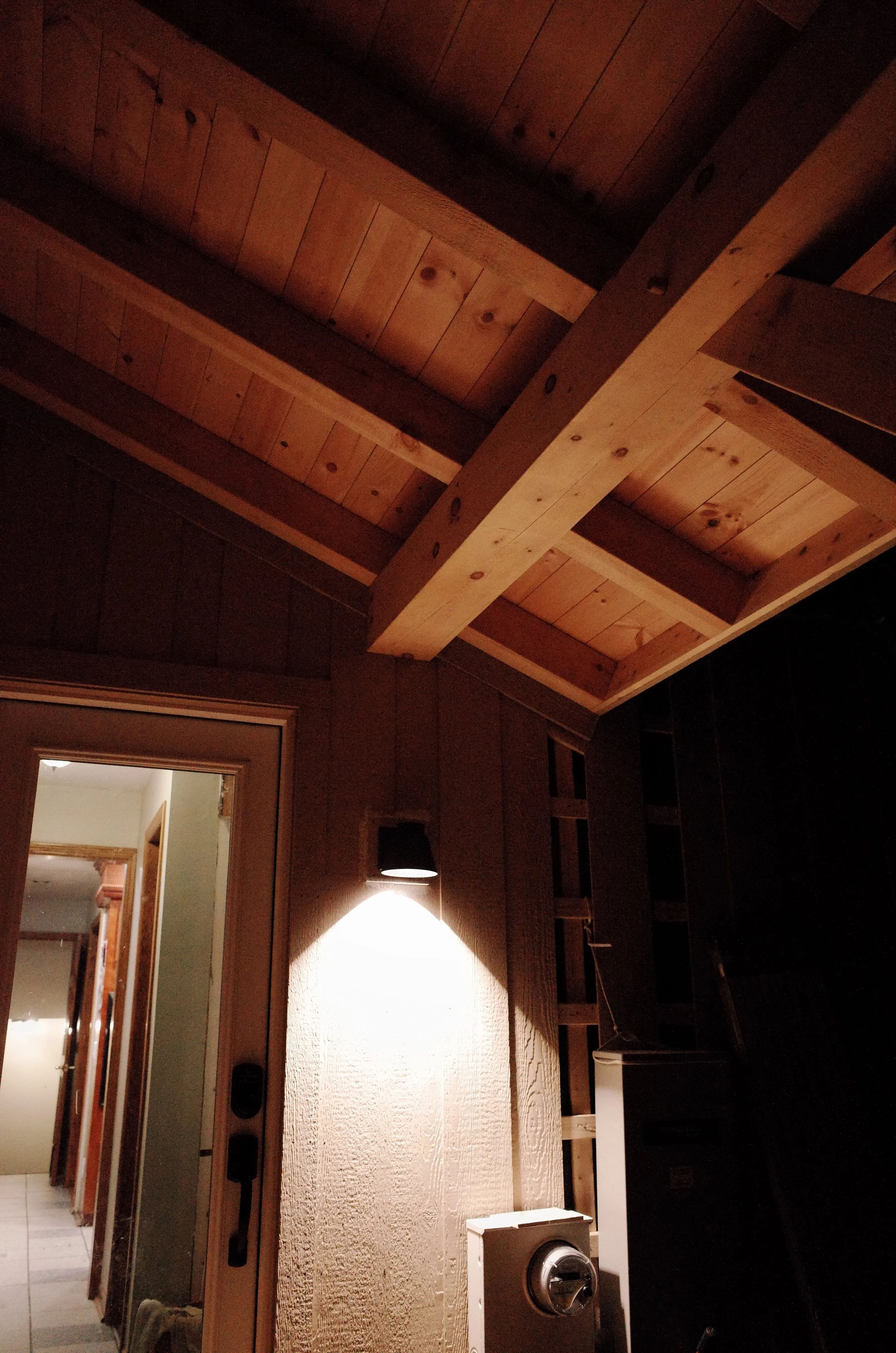
The solution; a traditional timber framed covered entry featuring locally sourced timbers, cedar decking, and new lighting.
The white pine timbers were harvested and milled less than 20 miles from the home. Each timber carefully hand cut into traditional mortice and tenon joinery with oak dowels. Assembled and raised to sit on Simpson post base - giving the necessary capillary break and structural connection between the concrete pier and framing.
A Considered Wall Assembly
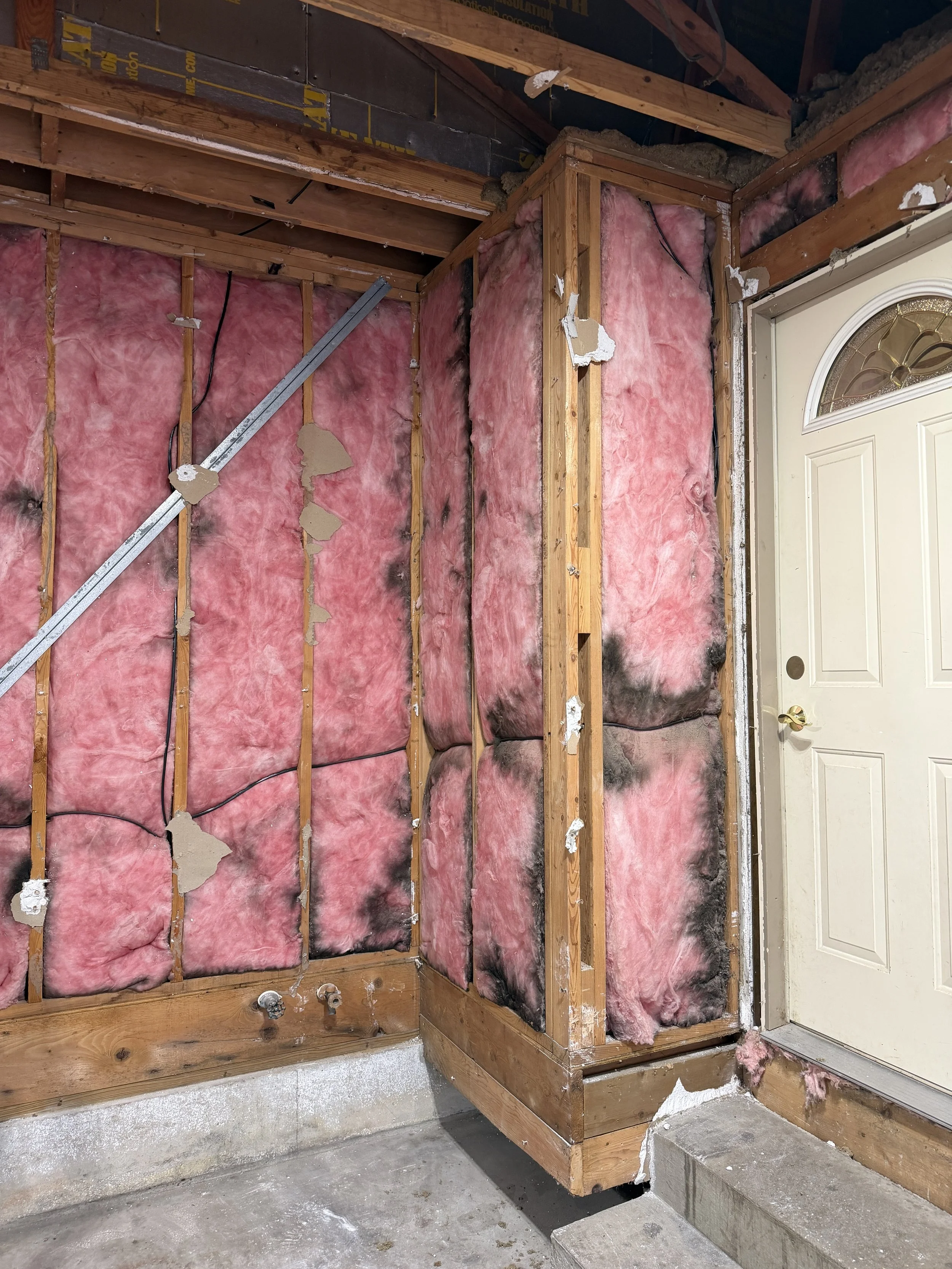
The original 1979 wall assembly featured 2×4 framing, R13 fiberglass insulation, EPS foam sheathing and Celotex sheathing, and cedar lap siding.
With no air control in the assembly, the house would bring in air wherever it could, filtering it through the rodent-infested fiberglass insulation. Any time the home was in a state of negative pressure (range hood on, dryer running, whole-home fan on), the air would draw into the house through all of the gaps in sheathing and siding.
The EPS foam sheathing, while providing some thermal resistance, stood no chance to the many woodland creatures interested in gaining entry to the home. As any homeowner living in the woods knows, these pests can pose a serious problem to a home.
The new assembly addresses all four of the control layers, bringing true resilience and control to the home for the first time in its life.
R15 Rockwool Comfortbatt insulation is a mineral wool batt insulation; hydrophobic, vapor open, and an increased R value over fiberglass.
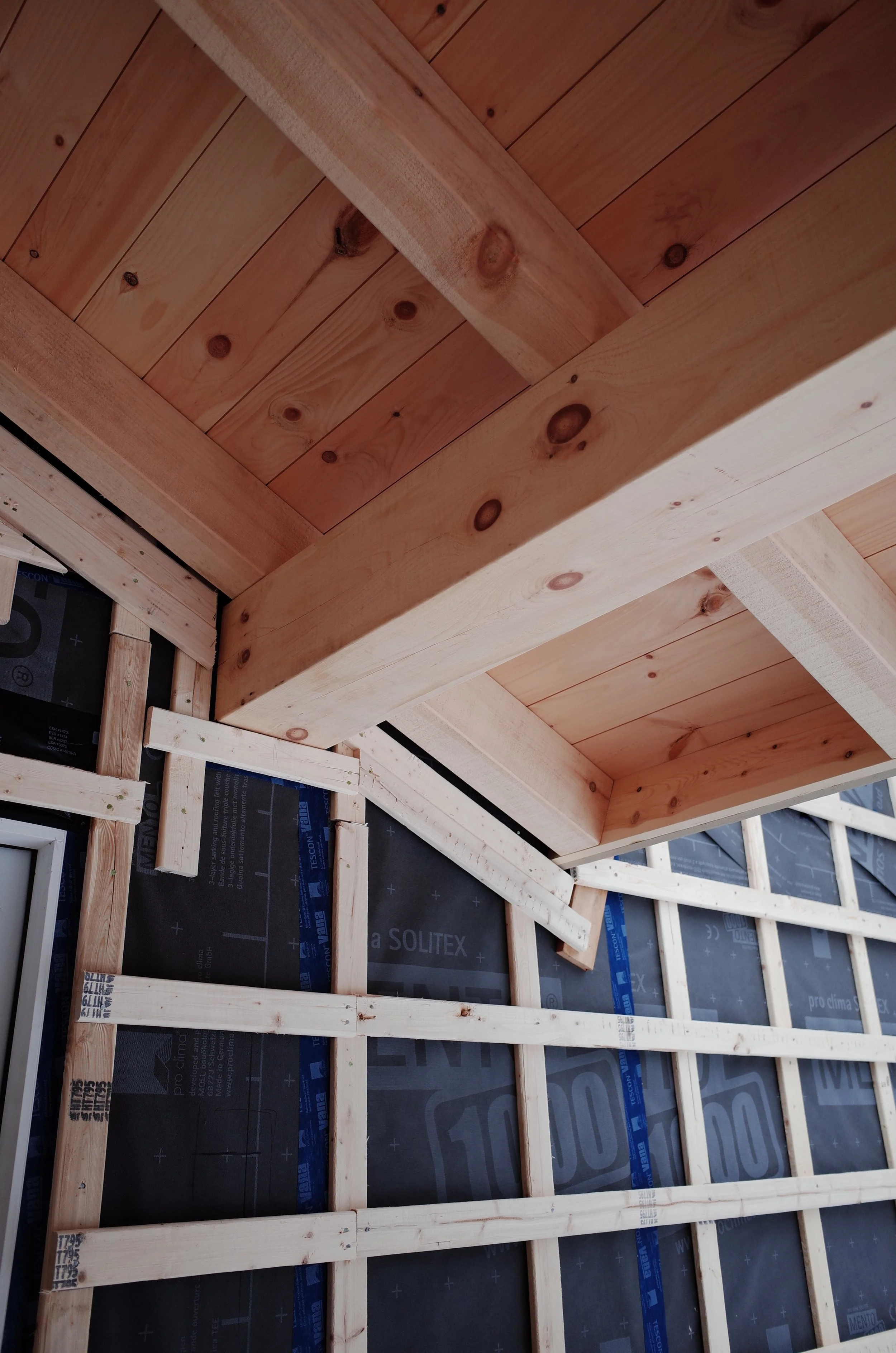
Pro Clima’s Mento 1000 and tapes create a robust air and water resistive barrier layer. Interior and Exterior are now clearly defined.
Halo Exterra continuous insulation adds thermal resistance to the wall, eliminates thermal bridging, and allows drying to the exterior.
A 1 ½ “ drained and ventilated rainscreen cavity allows any moisture that makes it behind the cladding to drain out and away from the home. The cavity is actively dried through the stack effect, bringing air through the bottom bug screen and up into the attic and out the roof ridge vent.
LP lap siding and trims are installed over the rainscreen cavity. High quality exterior paint is preserved much better when installed over the ventilated cavity, allowing the LP to dry from both sides.
Outdoor Living
A must-have for Michigan summers. Installing a 11’ x 25’ cedar deck to the front of the home provides an outdoor living space for this young family to enjoy all summer long.